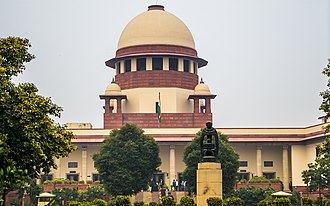
The Supreme Court of India recently delivered a landmark ruling clarifying the contours of the doctrine of legitimate expectation under Article 14 of the Constitution. This judgment is significant not only for its impact on taxation and policy promises but also for its reaffirmation that fairness and non-arbitrariness remain the cornerstones of State action.
Core Issue Before the Court
The central question was whether an industrial policy promise, once made by the State and relied upon by investors, could later be withdrawn arbitrarily by way of legislative or policy amendments. Investors had set up industries on the assurance of tax holidays, only to find that subsequent amendments curtailed these promised benefits.
The Court examined whether such withdrawal, without justification rooted in demonstrable public interest, violated the doctrine of legitimate expectation.
The Supreme Court’s Findings
The Court made several critical observations:
- Fairness is the essence of Article 14: Any action of the State must be tested on the grounds of fairness, reasonableness, and absence of arbitrariness.
- Legitimate expectation is a public law remedy: It flows from Article 14 and the principle of rule of law, ensuring predictability and trust in governance.
- Public interest is the only exception: A State can alter its promises only if it clearly demonstrates that the change advances public interest.
- Protection of investor confidence: Arbitrary withdrawal of promised benefits undermines trust in governance and deters both domestic and foreign investment.
Ultimately, the Court held that once a legitimate expectation is created by a competent public authority, it cannot be rescinded without strong justification. The affected industries, therefore, were entitled to the continuation of benefits originally promised.
Key Principles Laid Down
The Court crystallized guiding principles for applying legitimate expectation, including:
- The expectation must be reasonable and based on clear representation by an authorized authority.
- It cannot be against law or public policy.
- If withdrawn, public interest must be clearly demonstrated.
- Once established, legitimate expectations must be protected, unless outweighed by genuine public interest.
Madhumita Bhattacharjee’s Role
In this matter, Madhumita Bhattacharjee, Managing Partner at Lexcuria Lawyers, appeared before the Hon’ble Supreme Court, contributing to the nuanced legal arguments on behalf of the Respondent authority.
Her submissions emphasized the balance between State accountability and public interest, highlighting that while policy flexibility is necessary, it cannot translate into arbitrary deprivation of rights once promised benefits have accrued.
Through her arguments, the Court was invited to strike a careful balance between governance needs and investor protection.
Why This Case Matters
This judgment is a watershed moment for administrative and constitutional law in India. It sends a strong message that the State cannot act on whims when it comes to economic policy and citizen rights. By reinforcing legitimate expectation as an extension of Article 14, the Court has fortified the principle of fairness in governance.
For businesses, investors, and policymakers, this case restores faith that government promises—especially those encouraging industrial growth—carry binding weight unless demonstrably overridden by public interest.