Introduction
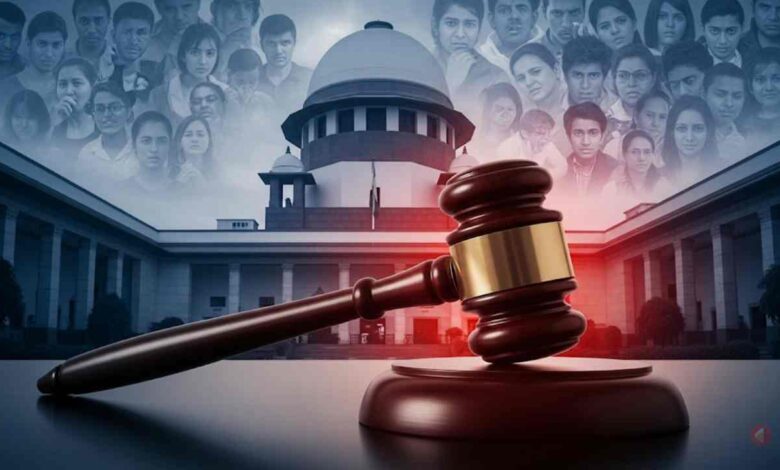
On 7 January 2025, the Supreme Court of India issued a detailed set of directions aimed at resolving longstanding delays in appointments to the Central Information Commission (CIC) and various State Information Commissions (SICs). These directions were passed in Miscellaneous Application No. 1979/2019 arising from the larger public interest litigation seeking transparent, timely, and rule-based appointments under the Right to Information Act, 2005.
The order reiterates the need for institutional independence and efficiency in the country’s transparency regime and seeks strict timelines for the Union and States.
Legal Background
The Right to Information Act, 2005 mandates the establishment of Information Commissions at the Central and State levels. These bodies are critical appellate authorities responsible for adjudicating RTI disputes and ensuring the effective enforcement of citizens’ right to information.
Over the years, litigation—including the well-known Anjali Bhardwaj decisions—has focused on ensuring that appointments to these Commissions remain transparent, merit-based, and timely. The Supreme Court has repeatedly emphasized proper advertisement of vacancies, disclosure of applicant lists, publication of search/selection criteria, and avoidance of ad-hocism in the appointment process.
The present order continues that judicial effort, addressing persistent delays in both Central and State appointments.
Analysis of the Supreme Court’s Directions
1. Central Information Commission (CIC)
The Court noted that while ten posts of Information Commissioners are sanctioned, only one Chief Information Commissioner and two Information Commissioners are currently in office. Though vacancies were advertised in August 2024, the selection process remained incomplete.
Accordingly, the Supreme Court directed the Department of Personnel and Training (DoPT) to file an affidavit clarifying:
- The timeline for completing the selection process.
- The timeline for processing recommendations and issuing appointment notifications.
- The composition of the Search Committee and the full list of applicants, in line with earlier Anjali Bhardwaj directions.
- A categorical statement confirming that only applicants who responded to the advertisement would be considered for appointment.
The affidavit is to be filed within two weeks.
2. State of Jharkhand
The Court took note of Jharkhand’s affidavit indicating that although 37 applications for the post of CIC and 300 for ICs were received pursuant to the June 2024 advertisement, the selection process was stalled due to the absence of an officially recognized Leader of the Opposition—an essential member of the Selection Committee.
To prevent administrative paralysis, the Court directed:
- The largest opposition party to nominate an elected member for the limited purpose of participating in the Selection Committee for CIC/IC appointments.
- The nomination to be completed within two weeks.
- The Selection Committee to commence work in the third week from the date of the order and endeavour to complete the process within six weeks.
- Appointments to be notified within one week of receiving the Committee’s recommendations.
- The Chief Secretary to file a compliance affidavit before the next hearing.
3. Directions to All Other States
After reviewing the status reports filed by various States, the Court observed a general lack of clarity regarding timelines. To address this, it issued uniform directions:
- Applicant lists to be published within one week.
- Composition of Search Committees and shortlisting criteria to be notified within the subsequent week.
- Interviews to be completed within six weeks from the date of such notification.
- Appointments to be finalized within two weeks of receiving recommendations.
Additionally:
- Chief Secretaries must file compliance affidavits.
- States must also report the total number of vacancies and pendency of cases before their Commissions.
- States where no vacancies exist are exempted from compliance but must still submit affidavits detailing the selection process already followed.
Lawyer’s Role
Among the counsel recorded in the proceedings, Ms. Madhumita Bhattacharjee, appearing as Advocate-on-Record (AOR), represented one of the respondent parties. Her participation contributed to the Court’s understanding of the factual and procedural context surrounding the appointment processes. As an experienced AOR, her role in presenting accurate documentation and assisting the Bench would have supported the Court in issuing clear, structured, and enforceable directions.
Conclusion
The Supreme Court’s order of 7 January 2025 marks another decisive step toward strengthening India’s transparency ecosystem. By mandating strict timelines, requiring disclosure of applicants and selection criteria, and removing bureaucratic bottlenecks, the Court seeks to ensure that both the Central and State Information Commissions function at full strength.
These directions reinforce the constitutional significance of the right to information and emphasize the institutional integrity required for its effective enforcement. The next hearing on 4 March 2025 will provide an important opportunity to assess nationwide compliance and further streamline the appointment processes.