Background of the Case
A commercial agreement executed in October 2020 contained Clause 54, which provided that any disputes arising between the contracting parties would first be attempted to be resolved amicably. If such attempts failed, the disputes were to be referred to a sole arbitrator in Kolkata, governed by the Arbitration and Conciliation Act, 1996.
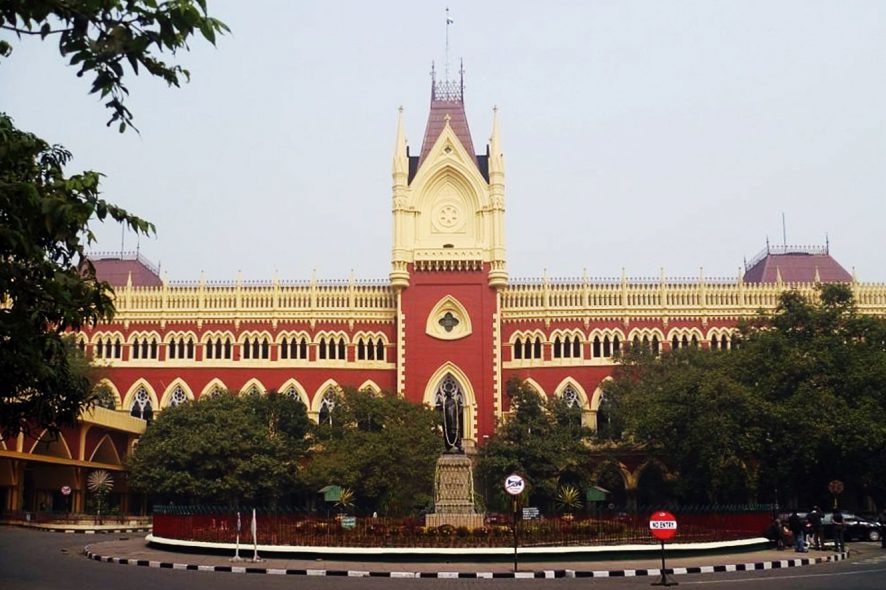
After the completion of contractual work in 2023 and final payment in May 2023, disagreements arose regarding alleged outstanding dues and additional expenses. The petitioner formally invoked arbitration in March 2025. When parties could not reach consensus on appointing an arbitrator, the matter was brought before the Commercial Division of the Calcutta High Court under Section 11 of the Arbitration Act.
Proceedings Before the Court
- The petitioner argued that amounts remained unpaid despite completion of work, and invoked Clause 54 to initiate arbitration.
- On behalf of the respondent, Atanu Saikia appeared and contested the claim, submitting that all dues had already been discharged, rendering the petitioner’s demands inadmissible.
- The Court observed that the issues raised were factual disputes, which could not be adjudicated at the Section 11 stage, but must instead be determined by an arbitral tribunal.
The Court’s Decision
Justice Shampa Sarkar held:
- Since correspondence between the parties had failed to yield an amicable settlement, Clause 54 became operative.
- The arbitration agreement was valid and enforceable.
- The Court accordingly appointed Mr. Ishaan Saha, Advocate (Bar Library Club, Calcutta High Court), as sole arbitrator, subject to compliance with Section 12 of the Arbitration and Conciliation Act.
- Both parties were granted full liberty to raise their claims and defenses before the arbitrator, who would decide independently.
Role of Atanu Saikia
In these proceedings, Atanu Saikia represented the respondent, advancing the position that the contractual obligations had been fulfilled and that the claims raised were without merit. His submissions highlighted the respondent’s stance that:
- Payments had been duly completed as per contractual terms.
- The additional claims raised at a later stage were unsustainable.
- Any residual disagreements were better suited for adjudication by the arbitrator, rather than prolonging litigation at the threshold stage.
By clarifying the respondent’s position, Atanu underscored the principle that arbitration should resolve substantive disputes, while the Court’s role under Section 11 is confined to facilitating the arbitral process.
Significance of the Order
This order reaffirms key arbitration principles:
- Minimal judicial intervention: Courts at the Section 11 stage do not enter into merits of claims; they only ensure the arbitration agreement is valid and operative.
- Party autonomy: By enforcing Clause 54, the Court reinforced the primacy of parties’ contractual arrangements.
- Efficient dispute resolution: Appointment of an arbitrator ensures that commercial disputes are addressed through the mechanism agreed upon, keeping litigation confined to its supervisory role.