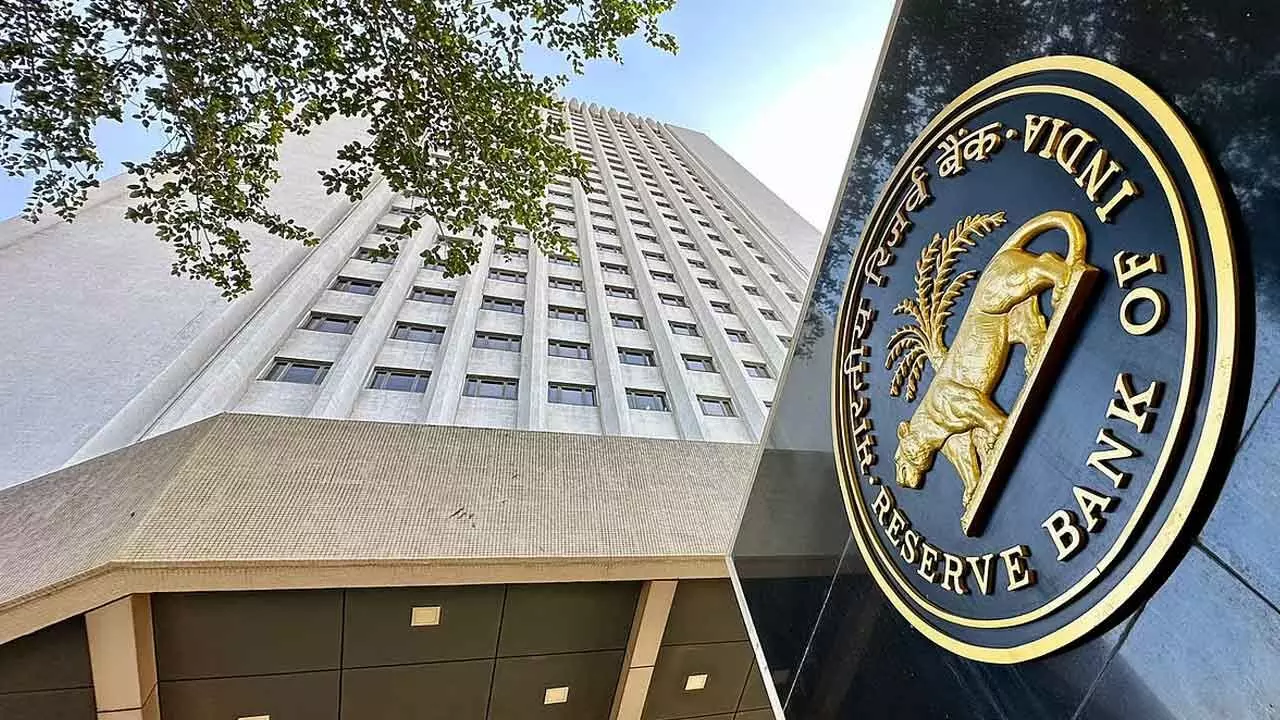
The Supreme Court of India delivered a significant ruling in 2009 on the scope of creditor rights under the Securitisation and Reconstruction of Financial Assets and Enforcement of Security Interest Act, 2002 (SARFAESI Act). The case examined not only the validity of certain provisions of the Act but also the role of the Reserve Bank of India (RBI) in defining “Non-Performing Assets” (NPAs) and whether such reliance amounted to excessive delegation of legislative power.
Madhumita Bhattacharjee, Managing Partner at Lexcuria Lawyers, appeared in this matter on behalf of the respondents before the Hon’ble Supreme Court, advancing submissions defending the statutory framework and RBI’s regulatory role.
Background of the Case
The dispute originated in the context of anticipatory bail conditions imposed by the Delhi High Court, but it evolved into a wider challenge to provisions under the SARFAESI Act. The appellants raised questions regarding the constitutional validity of the Act’s reliance on RBI guidelines for classification of NPAs, arguing that Parliament had impermissibly delegated essential legislative functions to the banking regulator.
On the other side, the respondents, represented inter alia by Madhumita Bhattacharjee, defended the legislative policy underpinning SARFAESI, emphasizing the need for creditor-centric enforcement in cases of prolonged default while maintaining safeguards for borrowers.
Issues Before the Court
The Supreme Court considered three key issues:
- Whether the definition of “Non-Performing Asset” (NPA), dependent on RBI guidelines, constituted excessive delegation of legislative power.
- Whether borrower protections under Sections 13(2), 13(3A), and 17 of SARFAESI were adequate to prevent arbitrary action by creditors.
- Whether reliance on different regulatory bodies (RBI, NHB, SEBI, etc.) for prescribing asset-classification norms violated Article 14 of the Constitution.
Court’s Observations
1. Nature of Loan Transactions and Creditor Rights
The Court reaffirmed that default in repayment of loans creates an enforceable cause of action for creditors. Traditionally, recovery required civil suits, which were slow and ineffective. SARFAESI marked a policy shift by allowing secured creditors to enforce their rights without court intervention, subject to statutory safeguards.
2. NPA Classification and RBI’s Role
A borrower’s account must first be classified as an NPA before a creditor can initiate enforcement under Section 13(4). This requirement was held to be a substantive safeguard, ensuring that creditors act only when repayment has truly ceased.
The RBI’s power to frame asset-classification guidelines was upheld as valid delegated legislation. The Court clarified that Parliament had already laid down the legislative policy — only genuine NPAs can trigger enforcement. RBI was entrusted merely with working out the technical details, which demand expertise and periodic revision.
3. Delegation and Article 14
Referring to earlier authorities such as In re Delhi Laws Act (1951) and M.K. Papiah v. Excise Commissioner (1975), the Court held that delegation of technical or procedural details is permissible where the legislature has already declared its policy.
Arguments of Article 14 violation, based on differential treatment of entities like banks, housing finance companies, and Exim Bank, were rejected. The Court noted that these institutions operate in distinct financial spheres and therefore require different regulatory regimes.
4. Borrower Protections
Sections 13(2) and 13(3A) require creditors to serve a notice before enforcement and to consider borrower representations. While the statute does not provide an independent appeal at this stage, it imposes a duty of fair consideration on creditors. Further judicial review under Section 17 before the Debt Recovery Tribunal ensures checks against abuse.
Judgment
The Bench comprising Justice R.V. Raveendran and Justice J.M. Panchal ultimately upheld the validity of SARFAESI’s provisions and the reliance on RBI guidelines. It held that:
- Classification of assets into Standard, Sub-standard, Doubtful, and Loss was a technical matter well within RBI’s regulatory domain.
- Parliament had not abdicated its essential legislative function.
- Borrower rights were adequately protected through procedural safeguards.
Significance of the Decision
This judgment remains a cornerstone in India’s banking and insolvency jurisprudence. It clarified that creditor-friendly enforcement mechanisms can coexist with borrower safeguards, provided there are objective standards like NPA classification. It also reaffirmed the constitutional principle that delegation of technical details to expert regulators does not amount to excessive delegation.
The ruling further aligned Indian law with international financial practices, where prudential norms and asset classification are largely regulator-driven.
Madhumita Bhattacharjee’s Role
In this case, Madhumita Bhattacharjee, appearing for the respondents, played a crucial role in defending the constitutional validity of the SARFAESI framework. Her submissions highlighted the statutory basis of RBI’s directions, the importance of creditor certainty in financial markets, and the safeguards available to borrowers.