In the landscape of All India Service litigation, delay by State Governments in deciding inter-cadre transfer representations is a recurring and well-documented phenomenon. Officers wait for years — sometimes the better part of a decade — for decisions that courts have repeatedly held should be taken promptly and in accordance with settled law. When such delay forces an officer to approach the Tribunal and then the High Court, it carries consequences. One of those consequences, as a Division Bench of the Delhi High Court made clear in a judgment delivered on July 30, 2021, is the imposition of costs on the State.
The case involved an All India Service officer who had been waiting since 2015 for an inter-cadre transfer on the ground of marriage to an officer posted in another State. Advocate Madhumita Bhattacharjee, Managing Partner of Lexcuria, appeared as counsel for the State of West Bengal before the Division Bench comprising Hon’ble Mr. Justice Rajiv Shakdher and Hon’ble Mr. Justice Talwant Singh.
Background: A Six-Year Wait for a Decision
The officer, who belonged to the All India Services and was posted in the West Bengal cadre, made a representation as far back as May 2015 seeking an inter-cadre transfer to the State of Uttar Pradesh, where her husband — also an All India Service officer — was posted. The State of Uttar Pradesh gave its no-objection for the transfer in July 2015. The way was institutionally clear.
The State of West Bengal, however, rejected the request in February 2016. Multiple representations followed over the succeeding years. Meanwhile, other officers in comparable situations had been granted inter-cadre transfers on marriage grounds — the officer’s request alone continued to be denied.
Notably, in September 2017, the Government of India had written to the State of West Bengal specifically requesting it to reconsider the cases of five named officers, including this officer, and issue NOCs for inter-cadre transfer on marriage grounds. Of the five officers named in that letter, one had been relieved by the State. The other four, including the officer in question, remained in limbo.
The officer challenged the February 2016 rejection before the Central Administrative Tribunal. In December 2020, the Tribunal allowed the original application, set aside the 2016 rejection order, and directed the State Government to consider the officer’s request afresh in light of the specified precedents and the Government of India’s September 2017 letter, within six weeks. The State Government then filed a writ petition before the Delhi High Court challenging the Tribunal’s order.
What Happened During the Pendency of the Writ Petition
A significant procedural development occurred while the writ petition was pending before the High Court. The State Government passed an order on June 24, 2021, taking a decision on the officer’s pending representation. This meant that the Tribunal’s direction — to consider the representation — had been complied with during the course of the High Court proceedings.
Advocate Madhumita Bhattacharjee, appearing for the State of West Bengal, brought this development to the Court’s attention. The fact that the State had now taken a decision on the representation was a material development that altered the landscape of the writ petition: the specific direction of the Tribunal (to consider the representation) had been acted upon, and the officer’s remedy, if she was aggrieved by the decision taken, was to approach the Tribunal afresh with a challenge to that order.
The Court’s Order: Disposal with a Direction and Costs
The Division Bench disposed of the writ petition on the basis of the decision having been taken during pendency, observing that the officer’s remedy, if aggrieved by the June 2021 order, lay before the Tribunal. The Court directed the Tribunal, if the officer approached it, to take up the application on an early date and dispose of it within four weeks of filing. All contentions of the parties were expressly left open for the Tribunal’s consideration.
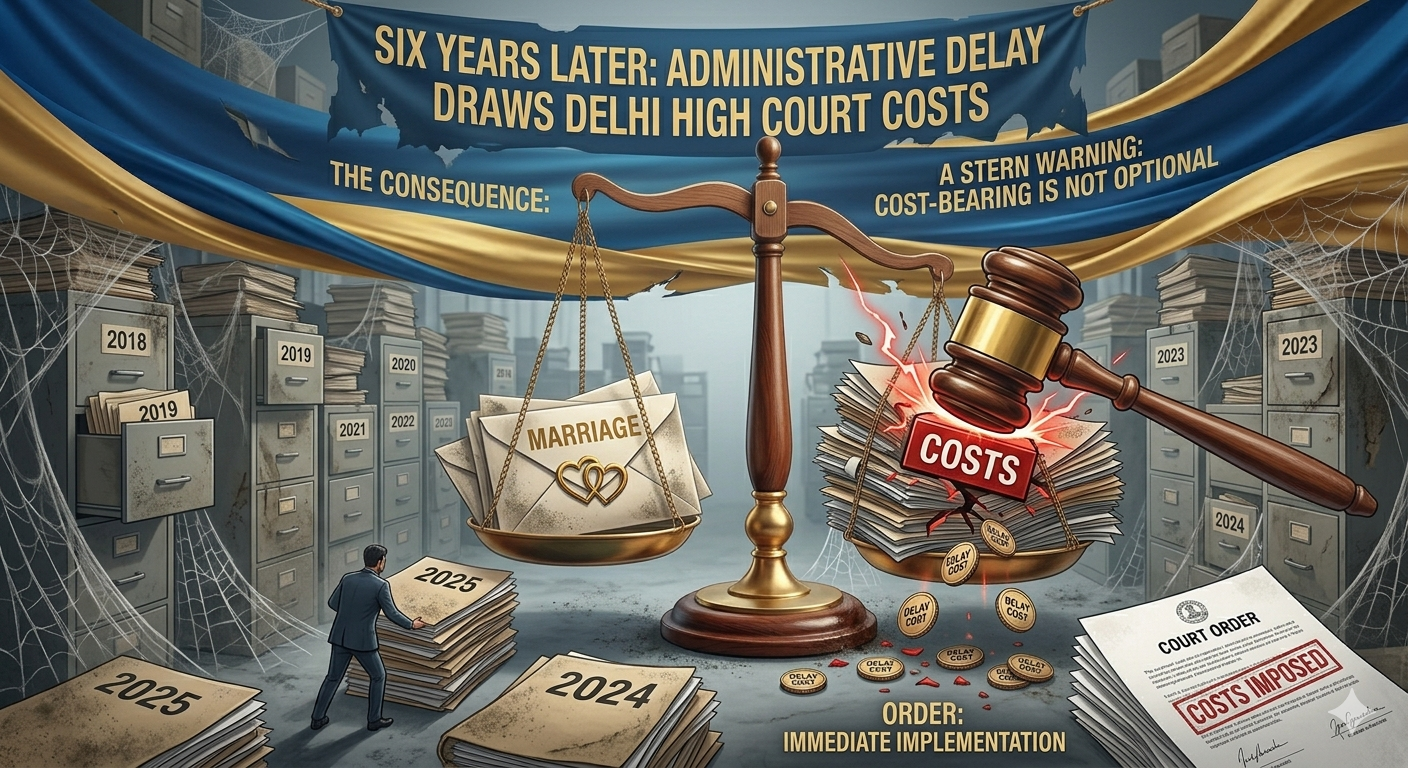
However, the Court did not close the matter without recording its view on the State’s conduct. The Division Bench noted, in terms that bear reading carefully, that the State Government had delayed in taking a decision on the matter, and that this delay had compelled the officer to approach both the Tribunal and the High Court. The Court accordingly directed the State to pay costs of Rs. 10,000 to the officer, to be paid within one week.
Why the Imposition of Costs Matters
The quantum of costs in this case — Rs. 10,000 — is modest. But the imposition of costs in service law proceedings by a State Government carries a significance that goes beyond the monetary amount. It is a judicial expression of disapproval of the conduct that necessitated the litigation. In the context of inter-cadre transfer cases, where the legal position has been settled by multiple Division Bench judgments and where the Government of India had itself written to the State requesting reconsideration, a five-year delay in taking a decision — and doing so only after the officer had been forced to litigate before the Tribunal and the High Court — was conduct the Court was not prepared to leave uncommented.
The award of costs in this context is consistent with a broader judicial theme visible across this body of service law litigation: courts are increasingly unwilling to treat administrative delay as a neutral or consequence-free occurrence, particularly where the officer has been prejudiced by the delay, the law is settled, and institutional pressure — in the form of the Government of India’s own communication — had already been brought to bear on the State.
Advocate Madhumita Bhattacharjee’s Appearance in the Proceedings
Advocate Madhumita Bhattacharjee, Managing Partner at Lexcuria, appeared as counsel for the State of West Bengal before the Division Bench of the Delhi High Court. She represented the State alongside other counsel in proceedings convened via video conferencing during the COVID-19 period. Her appearance in this matter, as in the other inter-cadre transfer cases in which Lexcuria has represented the State, reflects consistent engagement with a complex and evolving area of service law before the Delhi High Court and the Central Administrative Tribunal.
Key Legal Principles and Practical Takeaways
- Where the Government of India has specifically written to a State Government requesting reconsideration of inter-cadre transfer cases, the failure to act on that communication within a reasonable time is likely to be viewed adversely by courts.
- A decision taken on a pending representation during the pendency of a writ petition does not erase the prejudice caused to the officer by the preceding years of delay — courts may still impose costs to mark the conduct.
- Where multiple similarly situated officers have been relieved and one has not, the selective denial of the NOC raises questions that courts will scrutinise closely.
- When a Tribunal direction to ‘consider afresh’ is complied with during High Court proceedings, the officer’s remedy against the resultant decision is before the Tribunal, not the High Court. The High Court will preserve all contentions and may direct an expedited hearing.
Conclusion
The Delhi High Court’s order of July 30, 2021 captures, in a compact form, several of the recurring themes in All India Service inter-cadre transfer litigation: the long wait, the multiple representations, the selective reliefs granted to similarly situated officers, the Government of India’s communication going unheeded, the forced resort to the Tribunal and then the High Court, and ultimately a judicial direction accompanied by a cost award that marks the State’s conduct.
This case is also a reminder of an important procedural dimension: a decision taken belatedly — during the pendency of a challenge before the High Court — does not extinguish the officer’s substantive rights. It merely redirects the forum of challenge. The officer retains the full right to approach the Tribunal with a challenge to the late decision, and courts have shown a consistent willingness to ensure that such challenges are heard and decided expeditiously.
For All India Service officers navigating prolonged delays in inter-cadre transfer proceedings, the message from this and related cases is clear: administrative inaction and delayed decision-making have legal consequences. Courts have the tools — including expedited directions, cost awards, and where necessary contempt jurisdiction — to address them. The length of the wait does not diminish the entitlement. If anything, it strengthens the case for prompt judicial relief.
Advocate Madhumita Bhattacharjee’s appearance for the State in this proceeding is part of Lexcuria’s ongoing engagement with service law litigation at the Delhi High Court, where the firm has represented State Governments and public institutions across the full spectrum of All India Service cases — from transfer disputes and cadre-related questions to contempt proceedings and constitutional challenges to service rules.